

Nylon Straps and the Most Durable Materials for Bag Straps
Nylon straps work well on bags that are pulled, folded, and adjusted throughout the day. The material has high tensile performance, absorbs impact, resists abrasion, and feels smooth in the hand. It is commonly considered for shoulder bags, backpacks, travel bags, and adjustable handles.
Where the bag goes changes the choice. Polyester has low stretch and resists UV, moisture, mildew, and abrasion. Polypropylene is light and absorbs little water. Cotton feels softer and has a natural matte surface. Fibre is one part of the decision; width, weave, hardware, stitching, and reinforcement finish the job.
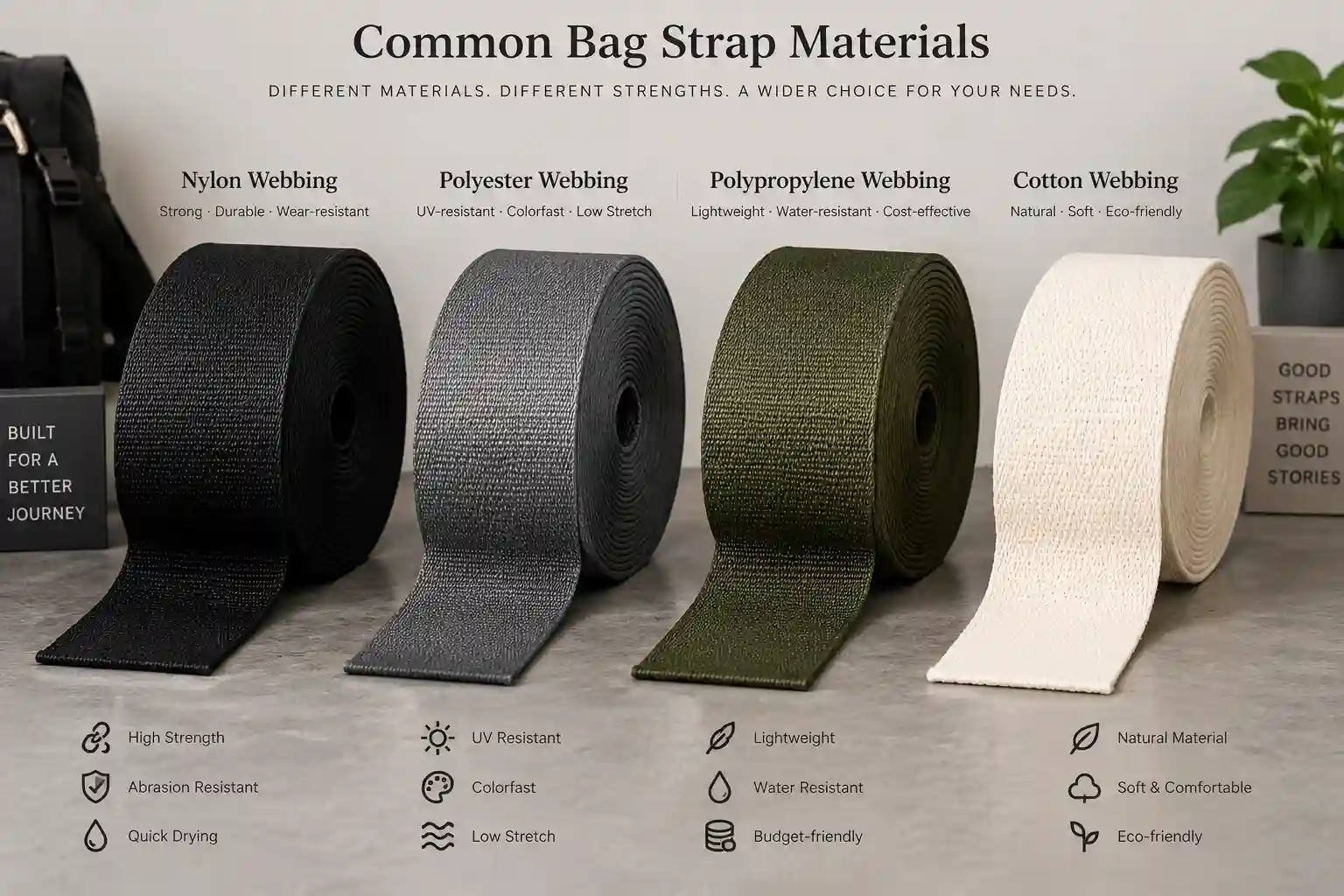
Which Bag Strap Materials Are Most Durable?
Durability changes with the job. A daily shoulder strap needs comfortable edges and resistance to rubbing. Outdoor use adds moisture, sunlight, and cleaning to the brief. The table below gives you a sensible place to start sampling.
|
Matériel |
Caractéristiques vérifiées |
Practical Starting Uses |
Confirmer sur l'échantillon |
|
en nylon |
Haute résistance à la traction, absorption des chocs, résistance à l'abrasion, toucher doux |
Backpacks, shoulder bags, travel bags, adjustable straps |
Edge feel, hardware movement, folds, stitched joints |
|
polyester |
Haute résistance, faible allongement, résistance aux UV, à l'humidité, aux moisissures et à l'abrasion |
Outdoor bags, luggage, utility straps |
Flexibility, exposure criteria, hardware fit, color |
|
polypropylène |
Lightweight, low water absorption, moisture and mildew resistance |
Lightweight totes, promotional bags, simple handles |
Stiffness, thickness, adjustment, abrasion points |
|
coton |
Doux, respirant, facile à teindre et à imprimer, surface mate naturelle |
Fashion totes, soft handles, printed straps |
Cleaning, shrinkage criteria, edge feel, sewing |
When Nylon Straps Are the Strongest Starting Point
Choose nylon when a strap runs through an adjuster, rubs on hardware, or takes short pulls in use. The smooth surface moves cleanly through hardware. Abrasion resistance matters most around rings, sliders, and folded ends. Any strength figure belongs to a specific construction and test method.
For a fair sample check, keep the width and hardware the same. Differences in flexibility, folded bulk, and adjustment then become much easier to spot.
When Polyester, Polypropylene, or Cotton Fits Better
Choose polyester for low-stretch outdoor projects with stated UV, moisture, mildew, and abrasion requirements. WUBAO produces sangle en sergé de polyester personnalisable for bag and footwear applications.
Polypropylene makes sense for a lightweight product that needs low water absorption. Cotton is often chosen for a soft handle, printed design, or natural appearance. Whichever route you take, sew it with the planned hardware before approving it.
Why Are Nylon Straps Durable?
A nylon strap looks simple on the roll. Its construction changes how it behaves once threaded through a bag. Yarn, weave density, thickness, and edge construction affect the way it passes through rings, buckles, and sliders.
Abrasion Resistance and Impact Absorption
Wear usually appears where a bag strap changes direction. Check the adjuster slot, metal ring, hook, folded return, and attachment seam. Nylon resists abrasion at these contact points and absorbs impact from sudden movement. The hardware surface and stitch layout affect what you see on the assembled bag.
Flexibility, Hand Feel, and Hardware Movement
Nominal buckle width tells only part of the story. Too much clearance lets the strap wander sideways; a tight slot makes it drag and creates bulky folds. Thread the sample through the actual hardware, adjust it several times, then feel both edges against the hand or shoulder.
Where Nylon Needs Project Testing
Write the working conditions into the brief. Include the intended load, cleaning method, moisture and UV exposure, contact points, and acceptance method. Add the thread, stitch pattern, overlap, and reinforcement. The supplier can then build and check the intended strap assembly.
Nylon vs. Polyester vs. Polypropylene vs. Cotton
Start with the bag itself. Its size, use, hardware, and environment quickly narrow the material list.
Everyday Totes, Shoulder Bags, and Crossbody Bags
Everyday bags put repeated pressure on the shoulder and attachment points. Nylon gives an adjustable strap a smooth feel and abrasion resistance. Cotton brings a softer, natural look to totes and fashion bags. Width and folded thickness matter too; both change comfort and the visual scale of the bag.
Backpacks, Travel Bags, and Outdoor Gear
On a backpack or travel bag, look first at ladder locks, rings, grab handles, and reinforced seams. Choose nylon when impact absorption and flexible handling lead the brief. Choose polyester when low stretch and outdoor exposure lead it. Run the webbing through the planned load path with the production hardware and thread.
Fashion, Printed, and Branded Bags
On a visible strap, color and texture carry real design weight. Printed patterns sit on the surface, while woven and jacquard methods build artwork into the textile. WUBAO’s capacité de marquage jacquard personnalisé covers names, logos, and repeating patterns. Send the artwork, repeat length, color reference, and placement with the sample request.
What Makes a Bag Strap Last Beyond the Material?
A material name fills one line of the specification. The rest of the strap decides how it works on the bag.
Width, Thickness, Weave, and Fold Bulk
WUBAO lists non-elastic webbing widths of 2.0, 2.5, 3.0, and 5.0 cm, depending on material and construction. Choose from the bag drawing, load path, sewing area, and hardware dimensions. Then check the weave and thickness. They change flexibility, texture, folded bulk, and movement through an adjuster.
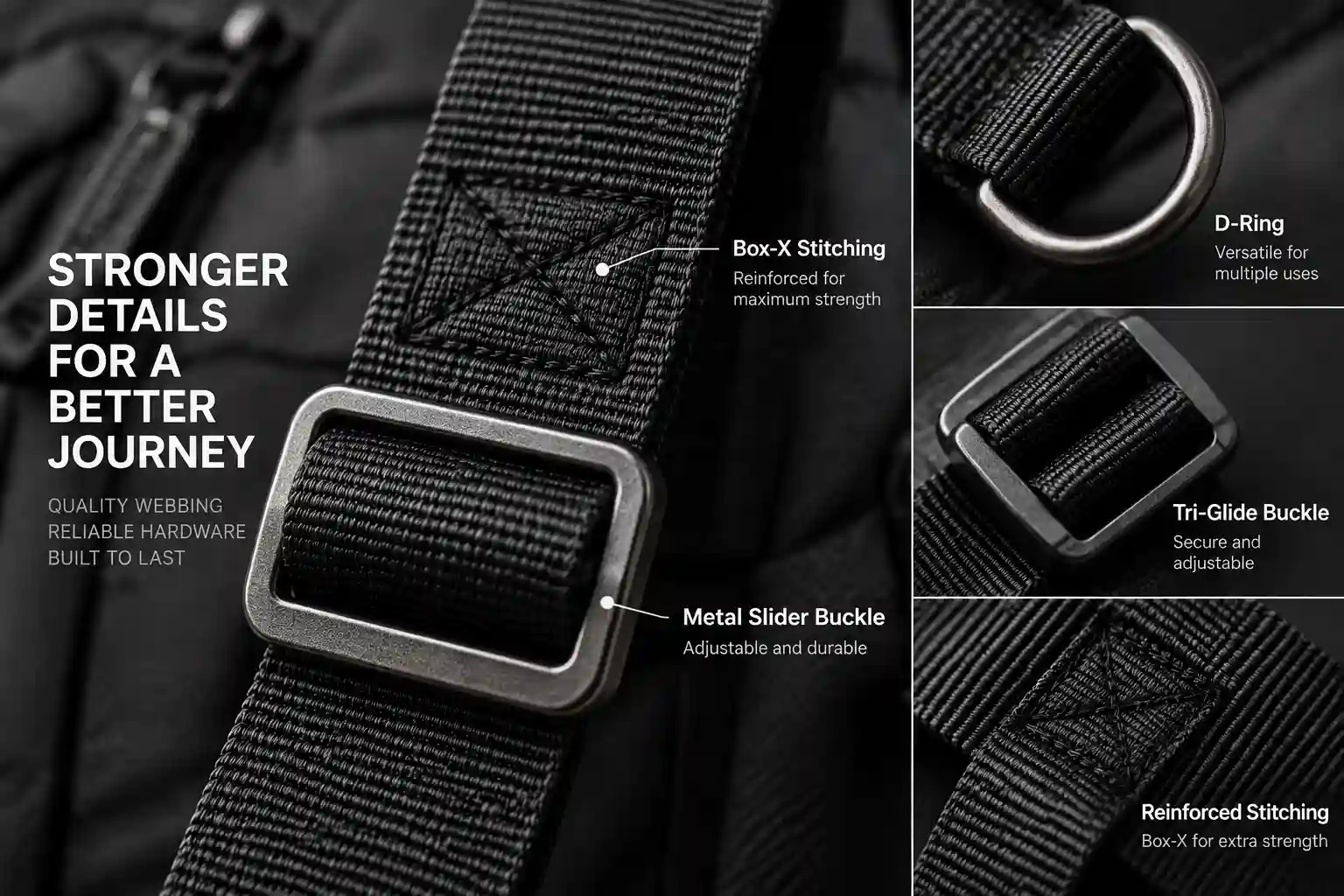
Hardware Fit, Stitching, and Reinforcement
Start with hardware made for the nominal width. Check the actual clearance at slots, sliders, rings, hooks, and keepers. Write down the thread, stitch pattern, overlap, reinforcement, and inspection criteria. Test the sewn joint as part of the assembly.
Edge Finish and High-Wear Contact Points
Run a hand along both edges. Then inspect the buckle entry, folded return, hook attachment, bag seam, and every place that rubs against clothing. Keep the final edge treatment and connection method in the approved sample.
How Should You Test Nylon Straps for a Bag?
Test the strap in a finished assembly. Use the planned hardware, thread, labels, and sewing construction, since changing any of them changes the check.
Consumer Replacement-Strap Checklist
- Match the attachment type and hardware finish.
- Confirm strap width, length, and adjustment range.
- Check edge comfort and folded thickness.
- Move the strap through each slider and buckle.
- Inspect stitching and reinforcement at both ends.
Brand and Manufacturer Sampling Brief
Keep the project details in one brief. Include the bag application and drawing, then add material, dimensions, color, artwork, hardware, quantity, performance criteria, packaging, destination, and trade terms. The supplier can price and plan the sample against the same specification.
Conclusion: Choose Nylon Straps as Part of a Complete Specification
Choose nylon straps when a bag needs impact absorption, abrasion resistance, and smooth adjustment. Polyester fits low-stretch outdoor work. Polypropylene keeps a lightweight strap from taking up much water, while cotton gives a softer hand and natural finish. Make the final call on an assembled sample with the planned hardware, folds, stitching, branding, and test conditions.
WUBAO Textile manufactures elastic bands and non-elastic webbing for bags, apparel, outdoor gear, pet products, and branded applications. The range includes nylon, polyester, cotton, and polypropylene. Project specifications can cover color, width, texture, logo, treatment, labels, and packaging. Review Les capacités de fabrication de sangles de WUBAO Textile while preparing the supplier shortlist.
For a bag-strap project, send the drawing, intended use, material preference, dimensions, hardware, artwork, quantity, test criteria, packaging, destination, and trade terms. That gives the supplier enough detail to recommend a material, plan the sample, and prepare a quotation.
FAQ (questions fréquentes)
Q1: Are nylon straps durable enough for everyday bags?
A: Yes, for many everyday bags. WUBAO describes nylon as having high tensile performance, impact absorption, abrasion resistance, and a smooth hand. Approve it with the planned hardware, folds, thread, stitching, and load conditions.
Q2: Are nylon or polyester straps better for outdoor bags?
A: The bag’s exposure decides. Choose nylon for impact absorption, abrasion resistance, and a smooth hand; choose polyester for low stretch and resistance to UV, moisture, mildew, and abrasion. Compare samples in the planned width, weave, hardware, cleaning method, and use environment.
Q3: How long do nylon bag straps last?
A: WUBAO’s supplied material gives no fixed service life. Construction, load, abrasion points, environment, cleaning, hardware, and stitching affect lifespan. Agree on project-specific tests and inspect high-wear points.
Q4: What width should a nylon bag strap be?
A: Choose width from hardware fit, bag size, load path, shoulder contact, and sewing area. WUBAO’s product material lists non-elastic webbing in 2.0, 2.5, 3.0, and 5.0 cm, subject to material and construction.
Q5: How can you make a bag strap stronger?
A: Strength comes from the whole assembly. Match the webbing to the intended load, then define hardware fit, folds, thread, stitch pattern, overlap, and attachment reinforcement. Test the webbing, joint, and hardware under the project’s agreed conditions.


