

What Is Elastic Webbing? Types, Uses, and Selection Tips
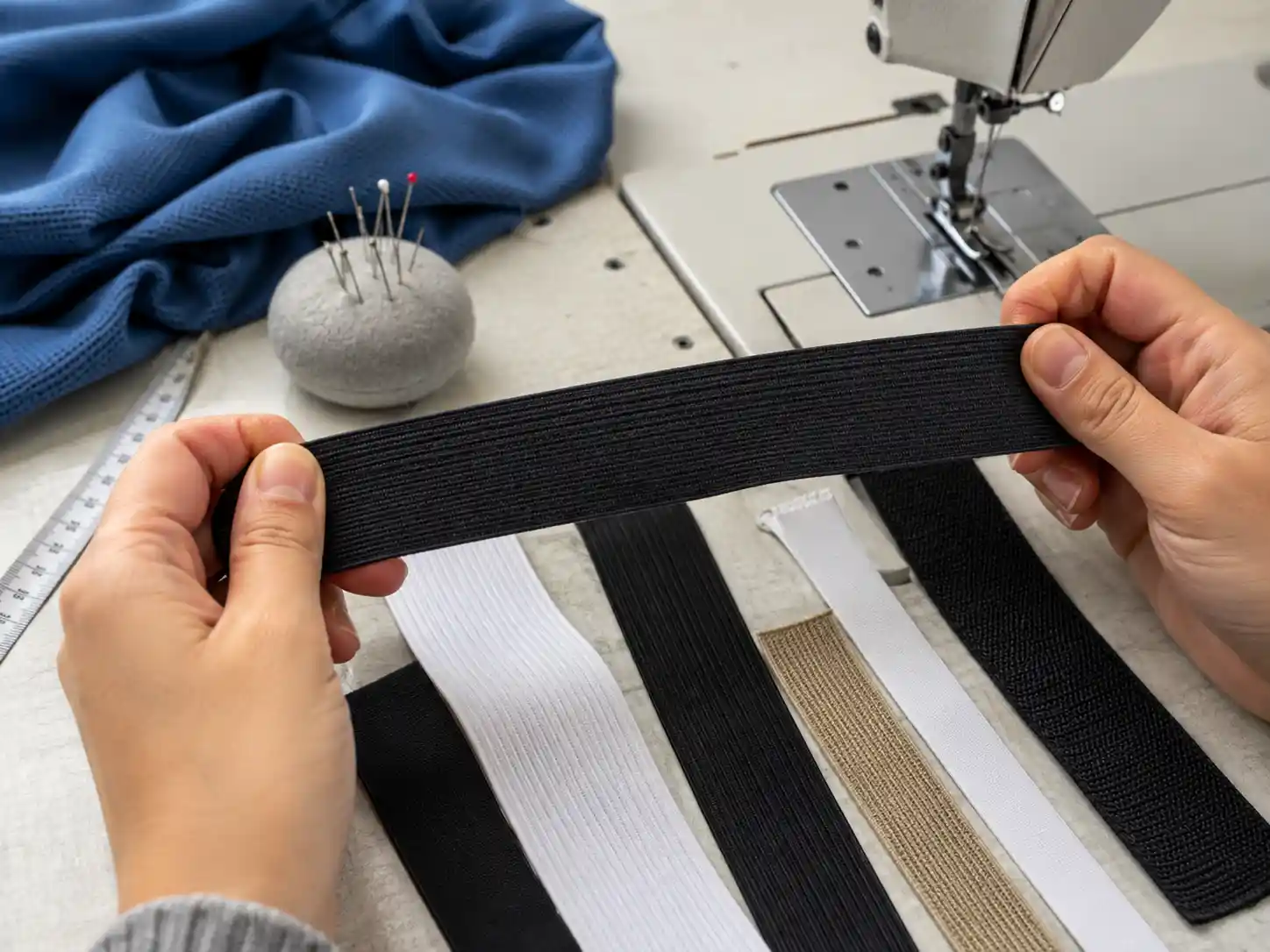
Elastic webbing is a flat textile band built to stretch and recover. It appears in underwear, activewear, fitted clothing, braces, sweatbands, bags, and sewing projects. The right band holds a product in place, moves with the wearer, and returns close to its starting length after release.
Selection starts with the finished item. Fabric weight, skin contact, washing, width, tension, and sewing method guide the choice. Test a sewn sample before cutting a garment or approving a bulk order.
What Is Elastic Webbing?
Elastic webbing combines stretch yarns with textile cover yarns in a flat strip. Manufacturers form the structure by weaving, knitting, or braiding. Each method produces a different surface, firmness, width stability, and response to stitching.
The cover yarn creates the color, texture, edge feel, and visible finish. The elastic core controls extension and recovery. A smooth cover supports skin comfort, and an even core helps a waistband hold its shape.
How Do Stretch and Recovery Affect Performance?
Stretch measures how far a band extends under tension. Recovery measures the length it reaches after the force is removed. A waistband needs both properties: enough extension for dressing and movement, followed by recovery that keeps the garment in position.
Heavy trousers can use a dense band with steady support. Lingerie and fine knits usually need a softer surface and lighter tension. For skin contact, feel both edges and stretch the band several times. Note roughness, curling, and slow recovery.
Elastic Webbing and Regular Webbing
These materials serve separate functions. Elastic webbing changes length during use. Regular webbing holds a set length and carries tension through a firm strap.
|
Buying Factor |
Elastic Webbing |
Regular Webbing |
|
Main function |
Fit, movement, and recovery |
Fixed-length support and load control |
|
Common products |
Waistbands, underwear, activewear |
Bag straps, handles, backpacks |
|
Key checks |
Surface feel, stretch, recovery, rolling |
Tensile strength, abrasion, edge finish |
|
Response to pulling |
Extends and returns |
Remains close to its set length |
A backpack adjuster uses regular webbing to hold its selected length. A sports waistband uses elastic webbing to expand with movement and contract after tension drops.
What Benefits Does Elastic Webbing Provide?
Elastic webbing adds controlled movement to clothing and soft goods. Width spreads pressure, while construction sets support and surface feel.
Fit and Support Through Movement
A well-matched band follows the body and keeps the garment at the intended position. Dense woven structures can stay flat inside trouser waistbands. Softer knitted bands suit garments that bend closely with the body.
Match the band to the fabric weight. Dense elastic can pucker a thin knit, and a soft band may give limited support in a heavy garment. Check a sewn fabric sample after stretching.
Visible Design and Brand Details
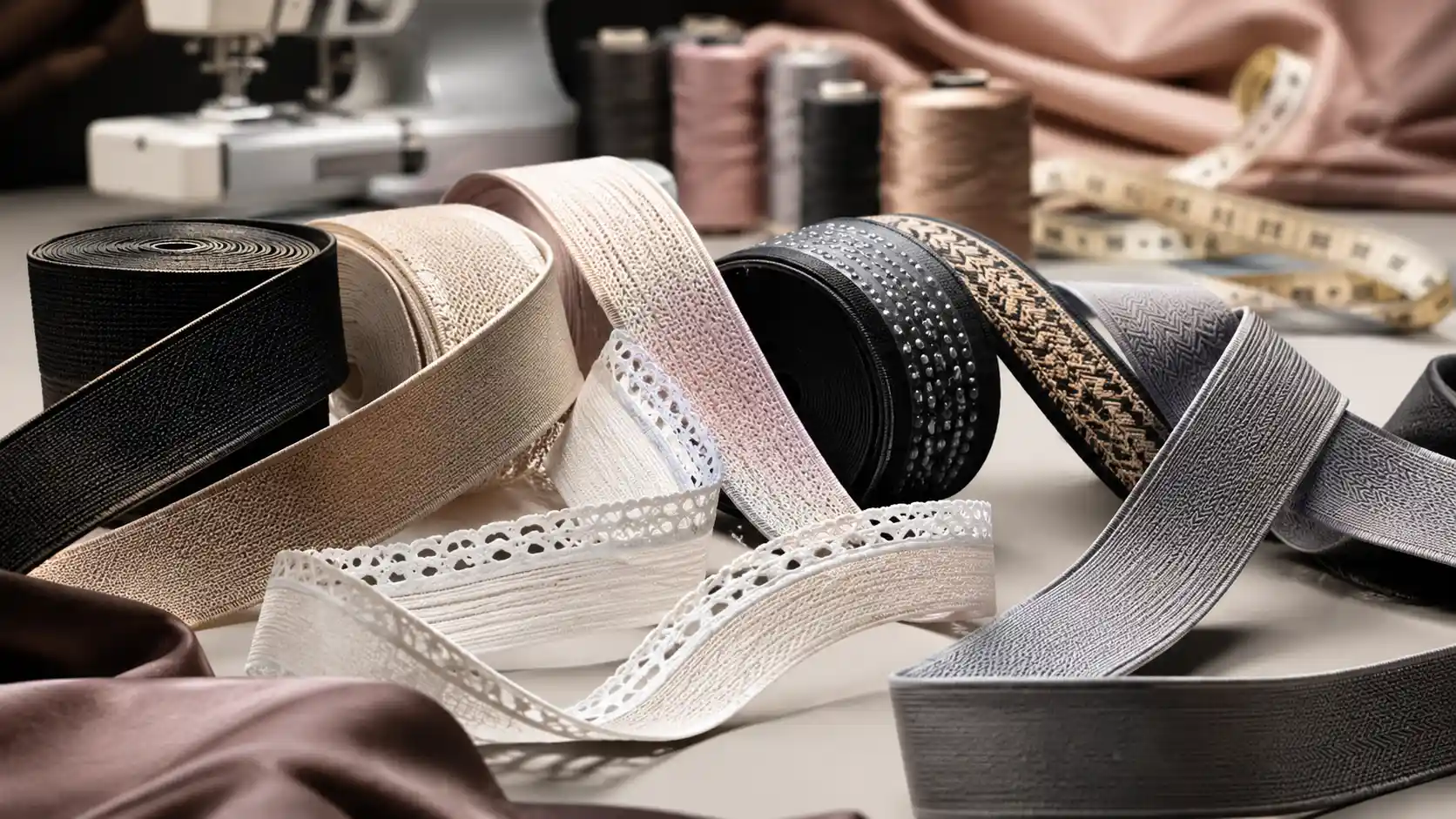
Elastic webbing can function as a visible trim or waistband. Color, edge shape, surface pattern, and logo placement become part of the garment design. Jacquard construction weaves letters or artwork into the band. Crochet edges add a lace-like finish for lingerie, children’s clothing, headbands, and decorative openings.
What Types of Elastic Webbing Are Available?
Product names often describe either the base construction or an added surface feature. Woven, knitted, and braided refer to the way yarns form the strip. Jacquard, grip, crochet-edge, and corn-grain describe appearance or function.
Woven, Knitted, and Braided Elastic
Woven elastic has a firm body and keeps a stable width during extension. It fits trouser waistbands, workwear, and garment areas that need defined support.
Knitted elastic bends easily and usually has a softer hand. It suits underwear, lightweight clothing, and many sewn-through applications. Test the specific band because stitch choice and density can change its recovery.
Braided elastic has visible ribs and commonly sits inside a casing. Its width often narrows during stretching. A casing test shows whether the band moves freely and stays flat.
Plain and Twill Elastic
Plain elastic works in everyday waistbands, pajamas, children’s clothes, cuffs, and home sewing. Wubao lists plain woven elastic in 2.0 cm, 2.5 cm, and 3.8 cm widths.
Twill elastic has a diagonal surface pattern and a dense structure. It suits workwear waistbands, active clothing, bags, and other applications that call for firm recovery and width stability.
Jacquard, Crochet-Edge, and Grip Styles
Jacquard elastic carries woven logos, words, or repeating artwork. Crochet-edge elastic combines stretch with a decorative border. Corn-grain textures create raised surface points, while latex or silicone grip lines add friction to selected contact areas.
Silicone grip elastic appears in strapless clothing, activewear, tall socks, and fitted supports. Review the grip material, skin-contact requirements, care method, and edge feel during sampling.
How Do You Match Elastic Webbing to a Project?
Begin with the garment or product in its finished form. Note the fabric, contact area, movement, care cycle, and sewing method. Then choose the construction, width, and tension.
Start With the Application
Underwear needs soft edges, controlled pressure, and steady recovery. Activewear adds sweat, repeated movement, and grip to the review. Home sewing projects need a band that feeds cleanly through a casing or works with the available machine and stitch.
A home sewer can compare two bands on one fabric scrap. Check the gathering, seam ridge, edge feel, and recovery after release.
Set Width, Tension, and Custom Details
Wide elastic spreads force over a larger contact area. Narrow elastic fits small openings and fine garment sections. The chosen tension should hold the product in place while allowing the intended movement.
For a bulk specification, list material, construction, width, thickness, color, stretch, recovery, edge style, pattern, care method, roll length, packaging, and quantity.
How Should You Test an Elastic Webbing Sample?
Use the fabric, thread, needle, stitch, and care method planned for the finished item. A repeatable sample check can follow five steps:
- Measure and record the relaxed length and width.
- Stretch the sample to the planned extension several times.
- Release it fully, wait for the set review period, and measure it again.
- Sew it to production fabric and inspect gathering, curling, edges, and stitch response.
- Wash and dry the sample according to the care label, then repeat the measurements.
For jacquard webbing, review artwork clarity and alignment. Grip styles need checks for friction, surface wear, and skin contact. Keep original and washed dimensions, photos, and sample labels on one approval sheet.
Which Elastic Webbing Fits Each Use?
Plain or knitted elastic suits many light garments and underwear applications. Woven or twill elastic gives defined support for trousers and structured waistbands. Jacquard carries visible branding, crochet-edge styles add decoration, and grip elastic adds friction. Approve the band after checking recovery, edges, sewing, and the planned care cycle.
About Wubao Textile’s Elastic Webbing Projects
Huizhou Wubao Textile Co., Ltd manufactures and customizes elastic bands and regular webbing for apparel, bags, outdoor gear, pet products, and branded applications. Its elastic range includes plain woven, twill, jacquard, crochet-edge, corn-grain, latex-grip, and silicone non-slip styles.
Customization can cover color, width, thickness, stretch or recovery requirements, woven or printed artwork, roll format, labels, and packaging. Stock samples may be available. Custom samples and commercial terms require quotation confirmation.
Send the fabric type, application, width, color, quantity, packaging, and test requirements to request a sample plan and itemized quotation.
FAQ
Q1: What is elastic webbing made of?
A: Elastic webbing combines a stretchable core with textile cover yarns. The selected product may use polyester or other textile fibers around the elastic yarns.
Q2: What is the difference between elastic webbing and regular webbing?
A: Elastic webbing extends and recovers during use. Regular webbing holds a fixed length for straps, handles, and load-control applications.
Q3: Which elastic webbing works for underwear?
A: Soft knitted or woven styles commonly suit underwear. Review the edge feel, width, tension, recovery, and compatibility with the garment fabric.
Q4: How can you test elastic recovery?
A: Measure the relaxed band, stretch it through repeated cycles, release it, and measure it again. Repeat the test after washing when the garment care cycle affects approval.
Q5: Can elastic webbing be customized?
A: Custom fields can include width, color, thickness, stretch or recovery requirements, jacquard artwork, printed designs, grip features, roll format, labels, and packaging.


