

Guide to Choosing the Right Webbing Tape
How webbing behaves becomes clear once you fold it, sew it, or run it through a buckle. Start the specification with the finished product. Define the load the strap must carry, the feel it should have in hand, and the conditions it will face.
Use those requirements to choose the material, width, thickness, weave, stretch, surface finish, color, stitching, hardware, treatment, and packaging. Then test a sample in the actual product to see how the choices work together.
Webbing Selection at a Glance
Use the application and working conditions to make a short, sensible sampling list.
|
Application |
Practical Starting Point |
Main Property to Review |
Confirm on the Sample |
|
Apparel and soft trim |
Cotton or elastic tape |
Hand feel, stretch, edge comfort |
Sewing, recovery, color, wash requirement |
|
Bags and handles |
Nylon, polyester, or cotton |
Grip, abrasion resistance, visual weight |
Fold thickness, hardware fit, joint construction |
|
Outdoor straps |
Polyester, nylon, or polypropylene |
Moisture response, UV requirement, stretch |
Weave, hardware, exposure test criteria |
|
Pet accessories |
Nylon, polyester, cotton, or polypropylene |
Edge feel, adjustment, abrasion points |
Buckle fit, stitching, finished-product tests |
Start With the Application and Finished Product
Choose against the finished item, not an isolated roll. Garment binding needs a slim seam; a leash or outdoor strap needs secure hardware and joints. Put folds, returns, labels, and connection points on the drawing, then test with production components.
Use a Material and Specification Shortlist
When several materials look suitable, sample two or three specifications. Hold width and hardware steady to make the comparison meaningful.
What Are Webbing and Tape?
Webbing is a woven or knitted narrow textile used for straps, reinforcement, trim, and binding. It may also be listed as tape.
Why the Terms Vary by Industry and Supplier
The name changes with the supplier and market. Compare material, width, thickness, weight, weave, stretch, surface, and intended processing before treating two products as equivalent.
Elastic vs. Non-Elastic Webbing
Non-elastic webbing holds its working length in handles, adjustable assemblies, labels, and reinforcement. Elastic bands suit waistbands, cuffs, fitted edges, and flexible binding. Specify extension and recovery for elastic products.
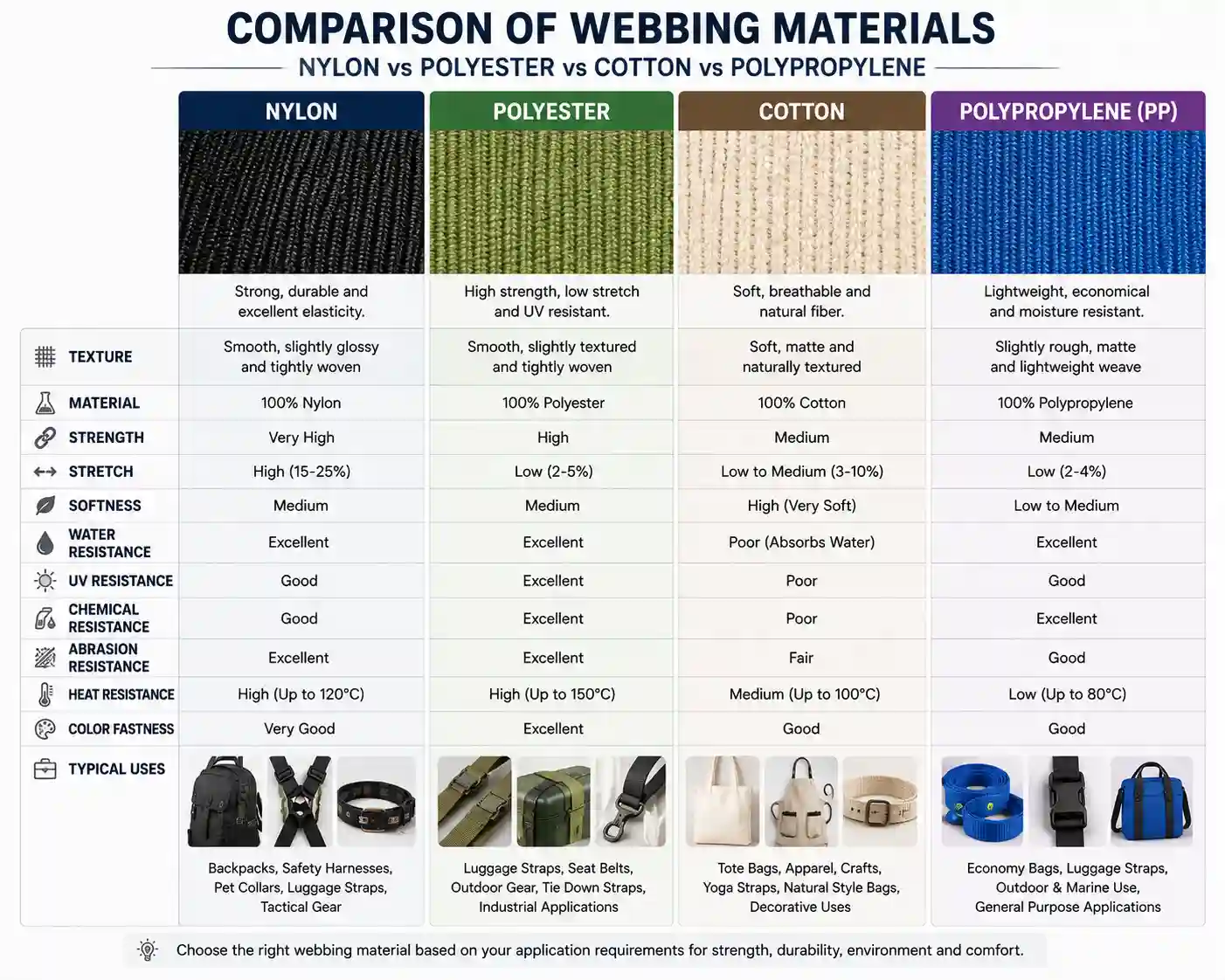
How Do Webbing Materials Compare?
The finished product and its working conditions point to the right fibre shortlist.
|
Material |
Verified Characteristics |
Common Starting Applications |
Sample Review |
|
Nylon |
High tensile performance, impact absorption, abrasion resistance, smooth hand |
Bags, outdoor gear, pet products, utility straps |
Edge feel, adjustment, joint and hardware test |
|
Polyester |
High strength, low stretch, UV, moisture, mildew, and abrasion resistance |
Outdoor straps, bags, pet accessories, furniture |
Exposure criteria, color, flexibility, hardware fit |
|
Cotton |
Soft, breathable, easy to dye and print, natural matte surface |
Apparel, aprons, bags, labels, soft accessories |
Shrinkage criteria, color, sewing, edge feel |
|
Polypropylene |
Lightweight, low water absorption, moisture and mildew resistance, bright colors |
Lanyards, light straps, garden and pet accessories |
Stiffness, thickness, abrasion points, adjustment |
Nylon Webbing
Nylon combines high tensile performance, impact absorption, abrasion resistance, and a smooth hand. Performance values need the selected width, thickness, weave, stitching, hardware, and test method.
Polyester Webbing
Polyester has high strength and low stretch, with resistance to UV, moisture, mildew, and abrasion. WUBAO produces customizable polyester twill webbing for bag and footwear projects.
Cotton Webbing
Cotton has a soft, breathable feel and a natural matte surface. It can be dyed and printed for apparel, aprons, bag handles, labels, and soft pet accessories. Check color, cleaning, and edge feel.
Polypropylene Webbing
Polypropylene is light, takes up little water, and resists moisture and mildew. It is used for lanyards, ID straps, garden products, and lightweight pet accessories. Check stiffness and thickness because both affect adjustment.
Which Webbing Specifications Matter Most?
A good sample request turns the application into details that can actually be checked.
Width, Thickness, Weave, and Hand Feel
WUBAO lists non-elastic webbing in 2.0, 2.5, 3.0, and 5.0 cm widths, depending on material. Use the drawing, load path, hardware, and sewing area to narrow the choice. Weave and thickness affect flexibility, folded bulk, texture, and adjustment.
Strength, Stretch, Abrasion, Moisture, and UV Requirements
Record the intended load, environment, contact points, cleaning process, and test method. Load figures need the exact construction and test conditions. Elastic products need extension and recovery criteria; outdoor products need stated exposure conditions.
Hardware, Folding, Stitching, and Edge Construction
Start with hardware made for the nominal width, then check clearance at buckle slots, sliders, rings, hooks, and keepers. Record thread, stitch pattern, overlap, reinforcement, and inspection criteria. An assembly trial shows side movement, feeding resistance, bulky folds, or uncomfortable edges. Use the approved sample as the production reference.
How Do You Match Webbing to the Application?
The application sets the priorities. Different constructions can still carry the same color system and branding.
Apparel, Binding, and Soft Accessories
For apparel, hand feel and edge comfort are often noticed first. Stretch, recovery, and wash conditions decide whether trim keeps its shape. Cotton suits soft handles and trim; elastic binding follows fitted edges, waistbands, and cuffs.
Bags, Outdoor Gear, and Utility Straps
On a bag strap, wear often shows around an adjuster, ring, hook, folded end, or reinforced seam. Outdoor use adds moisture, UV, abrasion, and cleaning requirements. Check points where the strap changes direction or rubs against hardware.
Pet Collars, Leashes, and Harness Components
Pet collars, leashes, and harnesses need stable adjustment, comfortable edges, compatible hardware, and reinforced joints. Choose material and width from the size range and drawing, then test the finished assembly with the planned components.
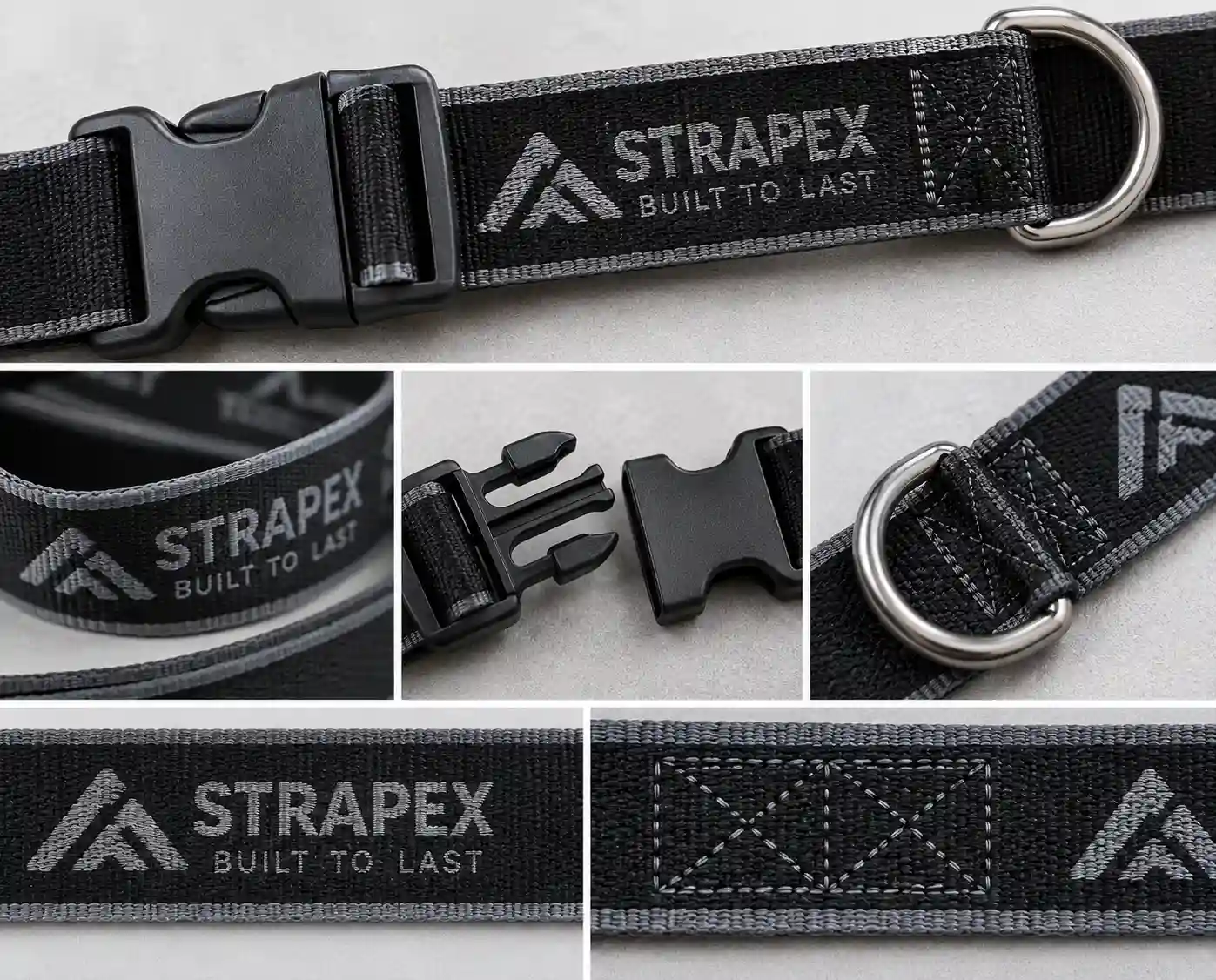
What Custom Webbing Options Should You Specify?
Once the base construction is clear, the customization brief becomes much easier to define.
Color, Print, Jacquard Logo, and Labels
Send the color reference, texture, artwork, repeat length, logo position, and label dimensions with the sample request. Printed patterns sit on the surface. Woven or jacquard methods build the design into the textile. WUBAO’s custom jacquard branding capability covers names, logos, and repeating patterns.
Functional Treatments and Packaging
Non-slip, reflective, and flame-retardant treatments need a relevant test standard. Packaging can use rolls, folded packs, cut lengths, labels, bags, insert cards, or branded formats. State quantity, length, artwork, destination, and trade terms in the quotation brief.
Sample and Supplier Evaluation Checklist
One review sheet gives design, purchasing, and production a shared reference for the same sample.
What to Inspect on a Webbing Sample
- Material, width, thickness, weave, color, and surface
- Hand feel, flexibility, edge condition, stretch, and recovery where applicable
- Hardware clearance, adjustment, folds, stitching, and reinforcement
- Print, jacquard pattern, logo scale, label placement, and packaging
- Agreed performance tests and acceptance criteria for the finished assembly
What to Include in a Quotation Brief
Send the application, material shortlist, dimensions, color, artwork, hardware, quantity, performance criteria, packaging, destination, and trade terms. Ask the supplier to state sample charge, MOQ, lead time, inspection, and delivery terms.
Conclusion: Build a Complete Webbing Specification
Build the webbing specification around the finished product. The sample needs the planned material, width, weave, hardware, stitching, branding, and packaging. Test it under the conditions written into the brief.
WUBAO Textile manufactures elastic bands and non-elastic webbing for apparel, bags, outdoor gear, pet products, and branded applications. Materials include nylon, polyester, cotton, and polypropylene. Buyers can specify color, width, texture, logo, treatment, labels, and packaging. Review WUBAO Textile’s webbing manufacturing capabilities during evaluation.
For a project review, send the drawing, material preference, width, color, artwork, hardware, quantity, test criteria, packaging, destination, and trade terms. The supplier can recommend a material, plan a sample, and prepare a quotation.
FAQ
Q1: What is webbing used for?
Webbing can carry a load, hold a component in place, cover an edge, or provide adjustment. Common examples include bag handles, garment trim, pet collars, lanyards, furniture straps, and outdoor gear.
Q2: What is the difference between webbing and tape?
Suppliers and markets often use these terms differently. Product equivalence depends on the material, width, thickness, weave, stretch, and intended use. Compare those details when selecting either option for the same application.
Q3: Which webbing material is best for outdoor use?
For a low-stretch outdoor strap, polyester is a practical material to sample. It suits applications where UV exposure, moisture, mildew, and abrasion matter.
Nylon has a smooth hand and provides impact absorption. Polypropylene keeps the strap light and absorbs little water. Test the chosen material with the intended hardware and production stitching before approval.
Q4: How do you choose the right webbing width?
Check the hardware dimensions first. The product size, load path, and available sewing area also affect the width. WUBAO lists non-elastic webbing in 2.0, 2.5, 3.0, and 5.0 cm widths, with availability based on the material and construction.
Q5: What information should you send to a custom webbing manufacturer?
Send the product use, material, dimensions, color or artwork, hardware, and order quantity. Include the test criteria, packaging, destination, and trade terms in the same request.
The supplier can use these details to recommend a material, plan the sample, and prepare the quotation.


