

Finished Webbing Straps vs Raw Webbing: Which Should You Buy?
Before comparing the two prices, look at the receiving dock. A roll arrives. Now what? Start with the step after receiving. Maybe your team cuts one roll into several lengths. Maybe a sewing partner adds loops or hardware. Maybe the strap has to go straight into another product. Write that down before you ask for prices. It will save a surprising amount of back-and-forth.
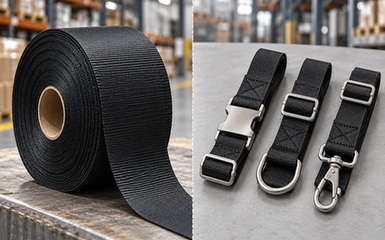
Decide where cutting and finishing happen
Raw webbing is the continuous material you cut and assemble yourself. Finished straps take more of that work off the buyer’s bench. That can be the sensible route when one roll will become several sizes. Before ordering, agree the length, width, folded areas, stitch positions, hardware, packing, and approved sample.
Your brief still needs the use, finished dimensions, attachment method, hardware, and sample points. Thewebbing categoryis a reasonable first stop. Generic pros and cons are not much help at quotation time.
|
Decision |
Raw webbing |
Finished strap |
|---|---|---|
|
Cutting |
Buyer or nominated workshop |
Defined before supply |
|
End treatment |
Buyer specifies and performs it |
Supplier sample must show it |
|
Sewing or folding |
Buyer controls the assembly plan |
Buyer approves the finished construction |
|
Hardware |
Added during the buyer’s process |
Included only when agreed |
|
Receiving check |
Roll identity, width, colour and condition |
Finished length, assembly, hardware and packaging |
|
Repeat order |
Reference raw material and conversion plan |
Reference approved finished format and revision |
The responsibility split reaches the receiving check as well. A roll is checked for identity, width, colour and condition before anyone cuts it. A finished strap is checked as a completed piece: length, assembly, included hardware and packing. If those checks are missing from the quote, ask which party will perform them.
Check the sample in hand
For a raw-webbing sample, write down what someone needs to recognise it later. Include the material, width, colour, pattern or logo, surface feel, and roll or sample number. Note what will be checked during conversion. If one roll will become several strap sizes, include the cutting plan. The person doing the conversion should be able to use that record without asking what last year’s buyer meant.
The finished sample is a different reference. It should show the complete component, with its dimensions, end treatment, stitching or folding, included hardware, packing, and approved revision. If it joins another product, try the connection before approval. Put the approved sample revision in the receiving record. Do not quietly call a move from rolls to finished straps a repeat order.
Keep the approval tied to the supplied format. The roll sample supports a material and a conversion plan; it does not approve every possible strap made from that roll. The finished sample supports a particular construction. A new buckle, fold direction or stitch location changes what the receiving team needs to verify.
The visible face deserves a check on a finished part, especially when a logo or pattern has a preferred direction. So does the attachment point. A strap can match its nominal length and still be awkward to use if the fold or hardware faces the wrong way. Review those details on the complete sample, then make sure the packing and receiving record identify the same approved version.
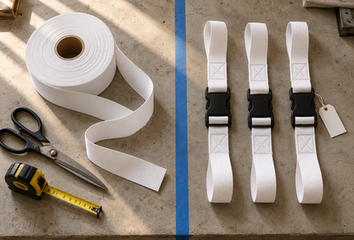
Write down the repeat-order details
Keep unknowns visible. ‘Supplier recommendation requested’ or ‘to be confirmed on sample’ is enough. For the next order, use the approved sample, specification version, controlled fields, and recorded changes.
For a safety, medical, load-bearing, or regulated product, name the applicable standard and ask for evidence for the exact item. Do not pass a claim from raw webbing to a finished assembly without checking it.
The format on the inquiry
Choose rolls when your team wants control of cutting, needs several finished lengths from one material, or has yet to settle sewing and hardware. You still inspect the shipment. The questions just change when you buy finished straps: check the completed component and the approved revision.
Tell the supplier what happens next, the finished dimensions, hardware status, order context, and the sample points that matter. If you are comparing the two formats,contact Wubao Textileand say which work your team will keep. TheOEM and ODM service pagecan start the exchange. Put the decision in the purchase record.
You can ask for both formats if both routes would work in your operation. Put the expected volume and packing format in the same inquiry so the supplier is pricing the same order context. For the finished option, check whether hardware is included. For the raw option, make sure the roll format suits your cutting plan.
The repeat specification should be short enough to use but specific enough to catch a change. For rolls, that means the material and roll format alongside the buyer’s conversion plan. For finished straps, it means the finished construction and sample revision. If a later order changes one of those controlled points, mark the change plainly and review whether a new sample is needed.
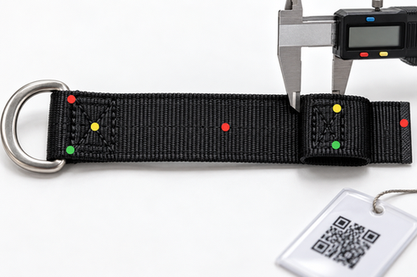
Use a short worksheet before requesting quotations
Final product; next production step; number of sizes; material and width; colour or pattern; end treatment; hardware; packing; receiving checks. Mark each point as fixed, sample-dependent or open for supplier input. Then put the two quotes beside that worksheet. Does the raw-webbing price include only a roll? Does the finished-strap price include cutting, assembly, ends, hardware and packing?
Also write down what would force a new sample. Length, stitching, hardware, logo, fold direction, packing unit and material are possible triggers. Then ask which work stays with the buyer after receiving. That is where the real difference between the two quotes usually appears.
FAQ
When is raw webbing more flexible?
When the buyer controls cutting, needs several finished sizes, or has not settled the final assembly.
What should a finished-strap sample include?
It should show the complete component, with its dimensions, end treatment, stitching or folding, included hardware, packing, and approved revision.
How should a repeat order reference the approved format?
Use the approved sample, specification version, controlled fields, and recorded changes.


