

Resistance Band Care and Storage Instructions: What Private Label Buyers Should Include
An instruction card can be ready for printing while its cleaning directions are still a guess. For resistance band care and storage, approve the wording against the exact finished construction.
We would hold the print order until the supplier has answered the cleaning and storage questions for that item, including what the user is meant to inspect.
We recommend keeping proposed instructions beside the sample they describe. A sentence copied from another band may refer to a different surface, elastic component or attachment. Ask what supports each direction and which parts of the finished item the advice covers.
Start with a product reference from our resistance band range. A retail name may be enough on the front of the card. On the working proof, we would also want the supplier’s item reference, so there is no doubt about which sample the reviewer is holding.
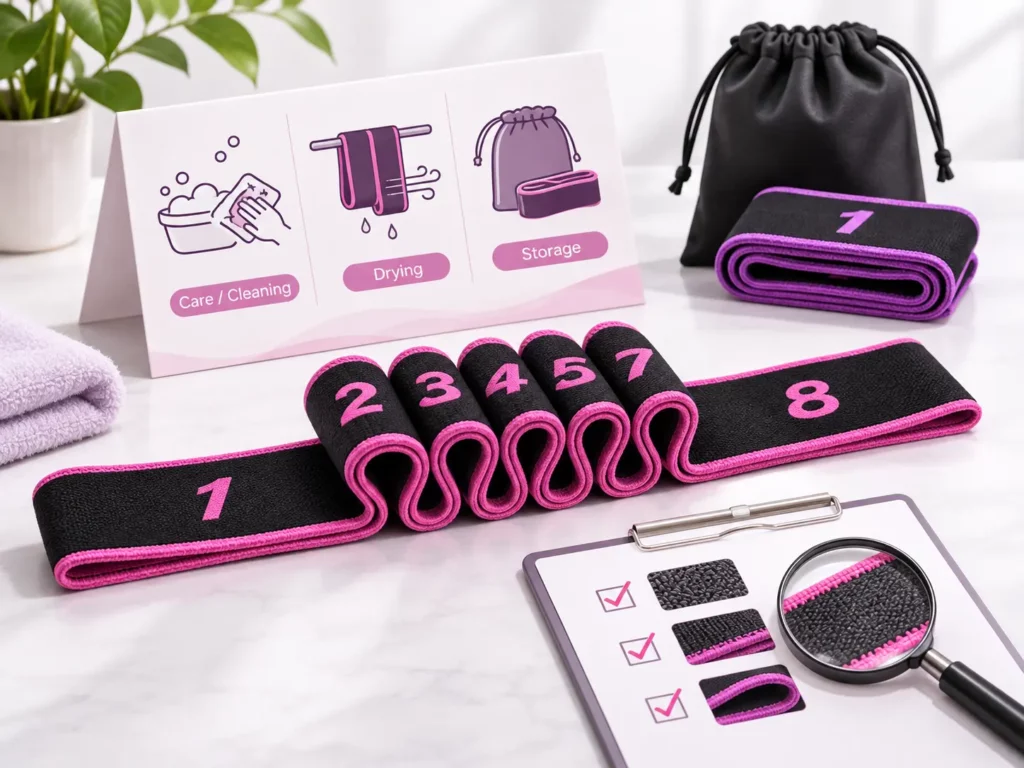
Start with the exact band construction
Describe the parts a user will handle and clean. For a fabric band, identify the textile surface, elastic components, markings and joined areas. What else comes off the item, if anything? Put those parts on the working sheet as well.
Otherwise the reviewer may be answering a question about the fabric while the buyer thinks the answer covers every component.
私たちの adjustable fabric band has numbered positions and integrated handle loops. We would lay that sample next to the illustration on the card. Are the numbered positions and loops recognisable?
If the drawing shows a plain rubber loop, we would replace it with an image of the ordered design before reviewing the wording.
We suggest a separate instruction record for each construction that needs different care. For a colour range, one question is whether the same directions cover every variant. We would put the supplier’s answer beside the list of covered references.
That is preferable to discovering, after printing, that the answer concerned only the first sample.
The supplier’s current directions are the first document we would read. Any gap can become a question on the proof itself. Can the finished item be immersed? Does the proposed cleaning method cover the printed areas? Are any components to be removed first?
Leave unresolved directions out of print production until they are confirmed.
The wider manufacturing handoff belongs in our OEM specification guide. For the care insert, retain a short construction description, a sample reference and a list of unresolved wording. This gives the review a manageable scope without making the card carry the whole purchasing brief.
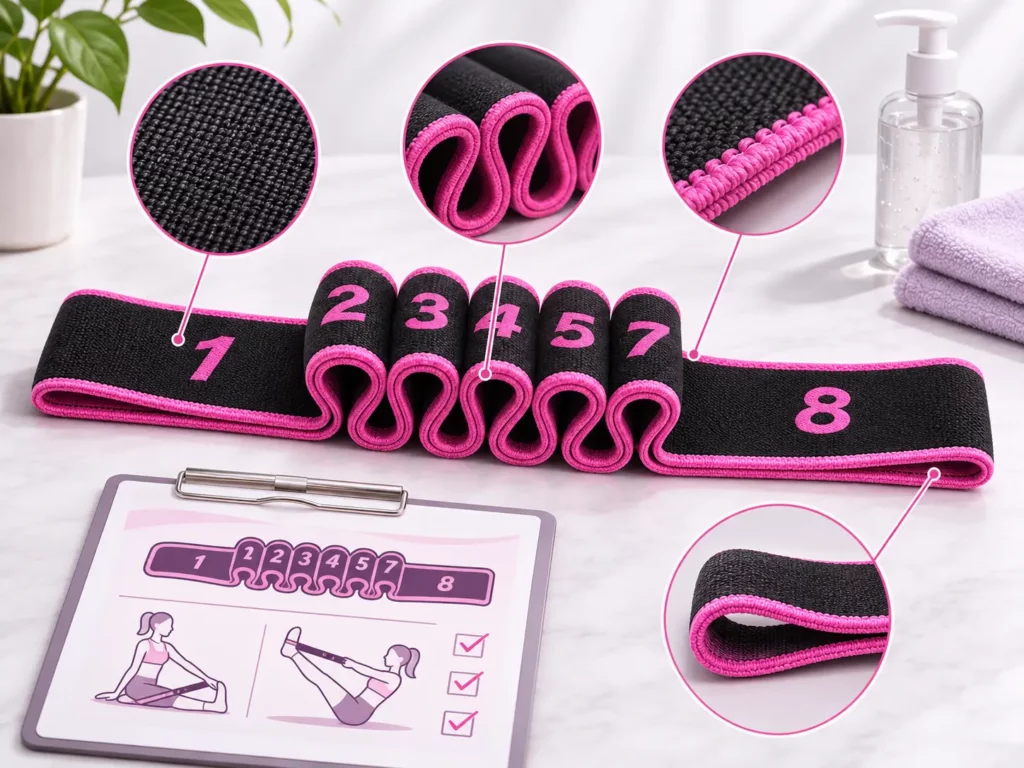
Separate cleaning directions from unverified promises
Take washable as a hypothetical line on an unfinished proof. We would circle it and ask what action it permits. Wiping, immersing and machine washing are different proposals. Which one has the supplier actually confirmed for this item, and under what conditions?
We would review disinfect and sterilise as separate claims, even if they appear beside the cleaning sentence. What evidence supports those particular words? If the answer covers only ordinary cleaning, the artwork should say only what that answer supports. Medical-sounding copy would remain unapproved.
Consider a hypothetical draft that says machine washable while the supplier’s response describes wiping the surface. We would return that sentence for clarification. Our question back would identify the exact sentence and the finished item. Has that machine process been evaluated for the assembly?
Until that is answered, we would leave a visible query on the proof rather than accepting the shorter wording.
A number on the draft would get its own query. Where did that temperature or cleaning frequency come from? We would trace it to the product-specific response before accepting it. Adding a familiar number from a different product would only leave the original question unanswered.
Use the following questions to review proposed wording. They are purchasing prompts, not cleaning directions for a particular band.
|
Proposed wording |
Question before approval |
|
Wash after use |
Which method applies to the finished assembly? |
|
Use a mild cleaner |
Which cleaner or category has been confirmed? |
|
Safe to disinfect |
What product-specific evidence supports this claim? |
|
Machine washable |
Which cycle and conditions have been evaluated? |
After the answer arrives, compare it with the shortened card text. Has a condition disappeared? We would give that sentence more space rather than approve a different meaning. A QR link can carry supplementary detail; we would still read the printed line with the phone put away.
Make storage instructions practical
We would leave two spaces on the working sheet, one for drying and one for storage. In the first, the supplier needs to describe what follows the confirmed cleaning process. Does the answer mention heat or drying equipment?
The matching illustration can wait until that response is clear.
The second space concerns the place between uses. We would ask about the conditions relevant to that material, such as heat, sunlight or moisture. A numerical temperature range would remain a query unless the supplier could support it for the ordered construction.
We would also check the proposed storage arrangement against the supplied accessories. If the product comes with a pouch, the instructions should explain any conditions that apply before putting the band inside. We would ask the supplier to answer that point explicitly.
A photograph of a pouch is no answer to a question about putting the item away after cleaning.
に 呉堡, review the storage sentence beside a photo of the packed item. Keep everyday storage, warehouse handling and transport directions distinct when they differ.
A shelf-life statement needs a defined basis too. Keep a production date, a suggested inspection routine and a validated storage-life claim distinct. Do not convert a broad durability description into a guaranteed number of months or years on the insert.
For a multilingual order, compare the translated storage wording with the approved meaning, including its conditions and exclusions. Keep the reviewed language version tied to the same product references.
Put inspection and replacement wording in plain language
For the inspection sentence, we would put the sample in front of the reviewer. Which surfaces and joined areas does the supplier want the user to examine? We would mark those on the working photograph before drafting the short instruction.
A direction to inspect regularly is easier to act on when the card names the parts the reader can actually see.
Request clear action wording for any listed damage or abnormal condition. Beside each listed condition, we would look for an action. Is the user being told to stop and contact support? The responsible reviewer needs to approve that wording for the item and market.
We would leave proposed repair advice out while that review is unresolved.
We would read any promise next to the inspection sentence particularly carefully. An item that looks unchanged has not thereby passed a laboratory test.
The insert should help the user follow the approved guidance without suggesting that a quick glance proves remaining strength or a guaranteed service life.
We recommend checking drawings as carefully as sentences. If an illustration highlights a loop, confirm that the supplied item has that loop in the same position. Crop away unrelated equipment and remove any diagram that could be mistaken for an approved exercise or attachment instruction.
The support line deserves a check with the packaging proof. Is it the right brand and the right destination for this sales channel? If a QR code is included, test its destination from the printed proof and assign someone to maintain the page for that product version.
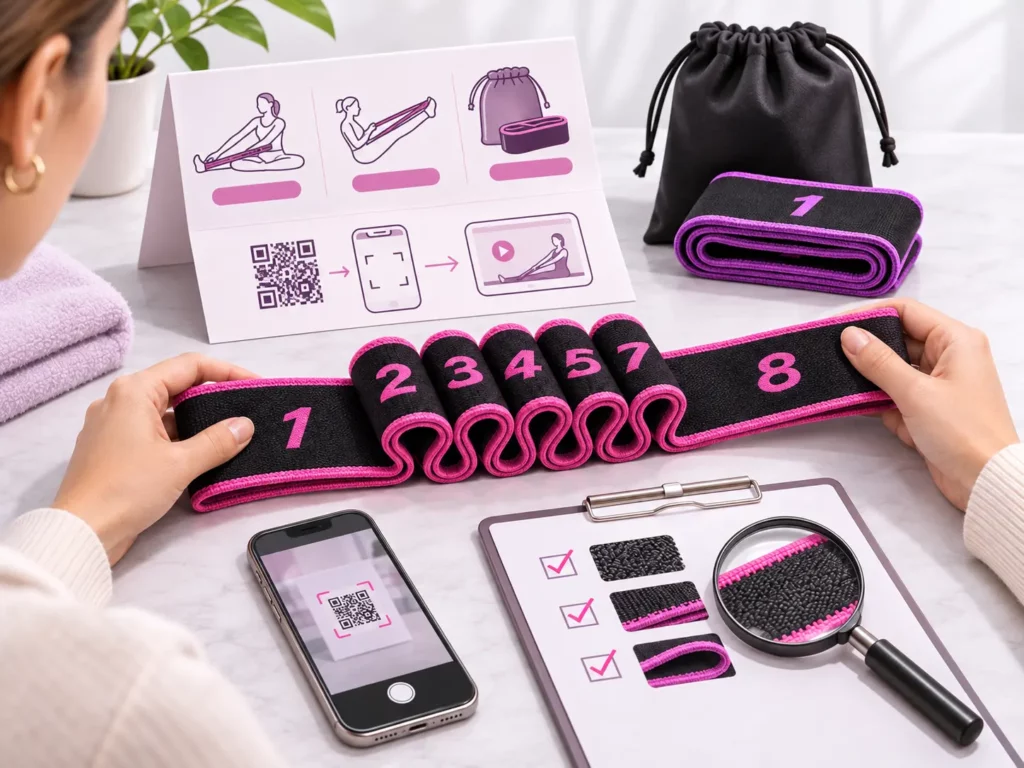
Approve the insert beside the finished sample
Before printing, place the sample, instruction proof and supplier responses together. Read the card in the order a customer will use it. Can the reviewer identify the product, follow the approved cleaning sequence, understand storage advice and find the inspection action without searching through several files?
Record the instruction version, covered product references, approved language versions and unresolved questions. We would put a name beside each remaining query.
If the cleaning response is still missing when the print order is discussed, the record should say so; an empty cell can too easily be read as a finished review.
Retain a printed proof where possible. Check text size, folds, illustrations and the QR destination on the actual card. Read it again after packing it with the product. Important directions should not disappear into a fold or be covered by another label.
If the material, print, attachment or construction later changes, ask whether the care record still applies. Keep the earlier approved wording with its original product version. This makes repeat-order review specific and avoids silently carrying old directions into a changed item.
To discuss the requirements, send the exact band reference and your proposed instruction text. Mark which cleaning, storage and inspection statements need confirmation. That marked draft gives us a concrete starting point for resolving the wording before artwork approval.


