

Why Does Bag Webbing Start Fraying, Breaking, or Fading After Use?
When developing backpacks, handbags, luggage, or outdoor bags, webbing affects load support, handling comfort, appearance, and product service life. Loose fibers, broken webbing, faded color, or a stiff surface can lead to safety concerns, customer complaints, and product returns.
These problems are often related to the webbing material, weave structure, edge finishing, dyeing or printing process, and the way the webbing is attached to the bag. This article explains how to select and confirm suitable bag webbing before bulk production.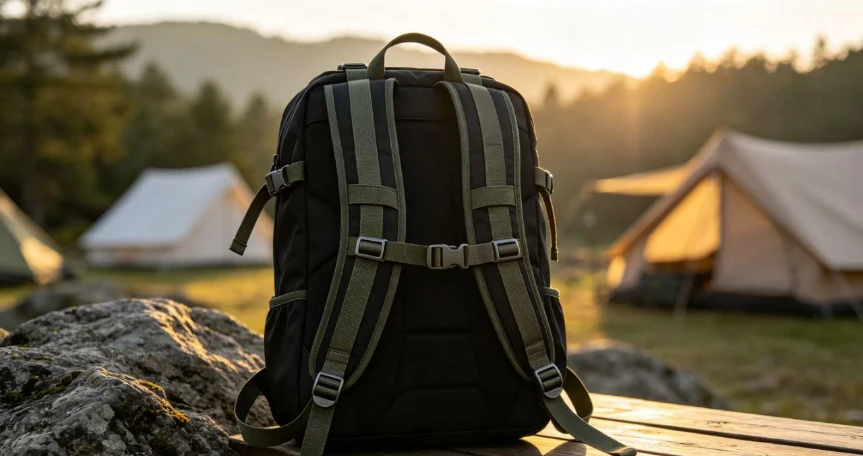
Client Pain Points
- The webbing frays, stretches, or breaks at handles, shoulder straps, or other load-bearing points, affecting bag safety and durability.
- Rough surfaces and sharp edges feel uncomfortable in the hand and may rub against clothing or skin.
- The color fades, becomes uneven, or turns whitish after use, affecting the appearance of the finished bag.
- Printed or jacquard logos look unclear, lose detail, or become damaged during use.
- Webbing width, thickness, color, texture, or hand feel varies between batches, increasing inspection and rework pressure.
- Unclear material and performance requirements lead to repeated sampling and delayed production decisions.
Our Solution
1. Match Webbing Strength to the Bag Structure
Backpacks, luggage, and outdoor bags place different levels of stress on handles, shoulder straps, loops, and attachment points.
We recommend polyester or nylon webbing according to the application, required load, bag construction, and stress points. Width, thickness, and weaving density are reviewed together so the webbing is suitable for the intended use.
This approach helps buyers select webbing with the required tensile strength, abrasion resistance, and handling performance for each part of the bag.
2. Improve Fraying Control and Hand Feel
Fraying and rough edges can result from an unsuitable weave structure, edge design, or finishing process.
We review the webbing surface and edges according to the customer’s requirements. The weaving method and finishing direction can be adjusted to create a flatter edge, smoother surface, and more flexible hand feel.
This helps reduce loose fibers, improve handling comfort, and limit friction against clothing or skin.
3. Confirm Color and Logo Presentation
Color and branding details need clear standards before bulk production.
We confirm the required color, width, thickness, texture, and surface appearance through samples. For branded bag webbing, we can recommend printed or jacquard processes according to the logo style, pattern detail, bag design, and required quantity.
Sample approval allows buyers to check color appearance, logo clarity, pattern placement, and overall hand feel before production begins.
4. Control Consistency from Sample to Bulk
Batch variation creates extra inspection work and makes repeat orders harder to manage.
After sample approval, we can retain the confirmed reference and production requirements for width, thickness, color, texture, and hand feel. Bulk webbing is produced according to these agreed standards.
This gives both sides a clearer reference for repeat orders and helps reduce differences between approved samples and bulk goods.
Productos
- High-strength polyester webbing
Suitable for backpack straps, luggage handles, and other load-bearing areas that require strength and abrasion resistance. - Correa de nylon
Suitable for bag applications that require a softer hand feel, high strength, and flexible handling performance. - Jacquard webbing
Logos and patterns are woven into the webbing, making it suitable for brands that need a clear and integrated branding effect. - Tela impresa
Suitable for multicolor patterns, detailed logos, brand graphics, and decorative design elements. - Cotton or blended webbing
Suitable for bags and accessories that prioritize a natural texture, soft hand feel, and casual visual style.
Value
Selecting suitable bag webbing materials and structures can help improve load support, abrasion resistance, handling comfort, and appearance consistency.
For buyers, a confirmed webbing standard can support:
- More consistent quality across production batches
- Lower inspection and rework risk
- Fewer sample revisions
- Clearer communication for repeat orders
- Better control of color, logo, width, thickness, and hand feel
For brands, stable webbing quality helps maintain the appearance, usability, and perceived quality of the finished bag.
Optional Supporting Point: Customization and Brand Presentation
Custom webbing can support both product function and brand identity.
Wubao Textile can develop dyed, printed, or jacquard webbing according to the bag style, usage scenario, logo design, color requirement, and budget. Our team can recommend a suitable process direction while considering the required width, thickness, strength, abrasion resistance, and hand feel.
Please contact our solution experts with your product application, required webbing width and thickness, color reference, load-bearing requirement, logo process, quantity, and bag construction details.
Wubao Textile can review your requirements and recommend suitable webbing materials, weaving or finishing processes, and sample directions for backpacks, handbags, luggage, and outdoor bags.


