

Wie man Nähgummibänder auswählt: Ein Leitfaden für breite und schmale Bänder
Wählen Sie die Breite des Gummibandes anhand der Funktion des Kleidungsstücks, der Tunnelzuggröße, des Stoffgewichts und der Auflagefläche. Wählen Sie anschließend eine Konstruktion, die zur Nähmethode und der gewünschten Rückstellkraft passt. Ein schmales Gummiband eignet sich für kleine Öffnungen und leichte Kräuselungen; ein breites Gummiband verteilt den Druck gleichmäßig auf Taillenbündchen und stützende Bereiche des Kleidungsstücks. Testen Sie das Gummiband vor dem endgültigen Vernähen immer mit dem eigentlichen Stoff.
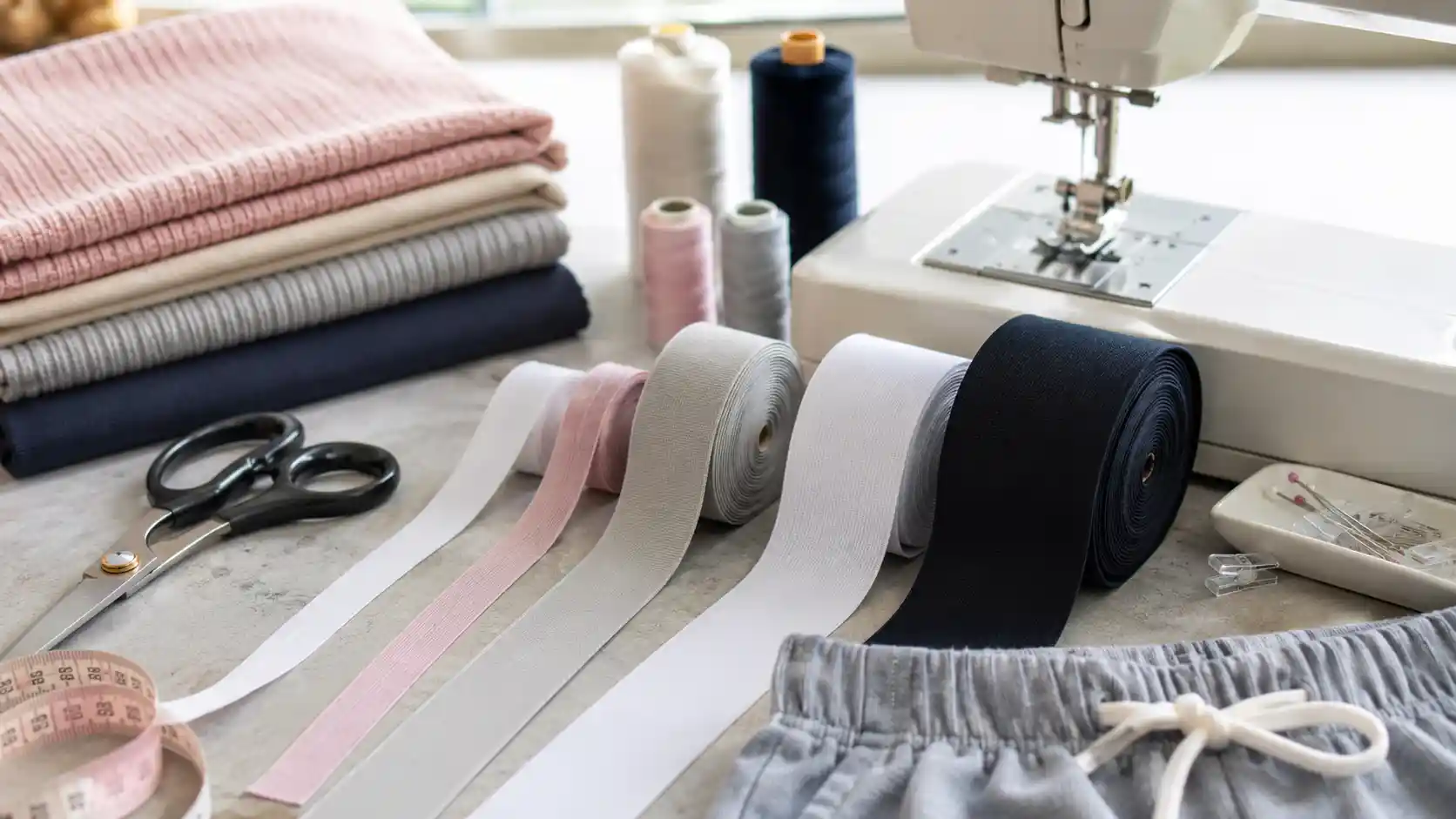
Was gilt als breites Gummiband?
Für praktische Nähprojekte gilt: Gummibänder unter 13 mm (1/2 Zoll) sind schmal, zwischen 13 und 25 mm (1/2 bis 1 Zoll) mittelbreit und über 25 mm (1 Zoll) breit. Da die Angaben auf den Etiketten der Hersteller variieren können, orientieren Sie sich beim Kauf an der gemessenen Breite.
Die Breite beschreibt den Abstand von Kante zu Kante. Die Dicke beschreibt das Profil des Bandes, und die Dehnbarkeit beschreibt seine Dehnbarkeit. Führen Sie jedes Feld separat auf, wenn Sie Produkte vergleichen. Ein 5 cm breites Band kann sich je nach Garn, Verarbeitung und Elastizität weich oder fest anfühlen.
Welche Gummibandbreite passt zu welchem Nähprojekt?
Beginnen Sie mit der Angabe der Gummizuggröße im Schnittmuster. Für ein individuelles Design passen Sie das Gummiband an die fertige Öffnung, den verfügbaren Tunnelzug, die Stoffstärke und die gewünschte Stabilität an. Die Tabelle bietet hilfreiche Anhaltspunkte.
|
Breitenbereich |
Metrisches Äquivalent |
Häufige Anwendungsgebiete |
Nähhinweise |
|
1/8–3/8 Zoll |
3–10 mm |
Dessous, Ärmelraffungen, Bastelarbeiten |
Verwenden Sie ein feines Gehäuse oder eine kontrollierte Direktnaht. |
|
1/2–1 Zoll |
13–25 mm |
Pyjamas, Röcke, Manschetten, Kinderbekleidung |
Lassen Sie genügend Platz im Gehäuse für freie Bewegung |
|
1–2 Zoll |
25–50 mm |
Leggings, Hosen, Sportbekleidung |
Wählen Sie eine stabile Rückstellkraft und verteilen Sie die Spannung gleichmäßig. |
|
Über 2 Zoll |
Über 50 mm |
Freiliegende Bundfalten, Stützeinsätze |
Testen Sie die Proportionen des Kleidungsstücks, den Kantenkomfort und die Waschbeständigkeit. |
Schmaler Gummizug für feine Gehäuse und kleine Öffnungen
Schmaler Gummizug eignet sich für leichte Raffungen, Kanten an Dessous, Ärmel und kleine Öffnungen bei Bastelarbeiten. Durch die geringe Auflagefläche entsteht ein konzentrierter Druck, daher sollte bei Kleidungsstücken, die direkt auf der Haut liegen, nur eine geringe Spannung angewendet werden. Feine Stoffe erfordern zudem eine feine Nadel und einen Tunnelzug, der den Gummizug flach und in Position hält.
Mittelbreites Gummiband für Bündchen und Alltagsbund
Mittelbreite Bündchen eignen sich für Pyjamahosen, lässige Röcke, Kinderkleidung und weiche Manschetten. Legen Sie das Gummiband vor dem Schließen der letzten Naht in den Tunnelzug. Es sollte sich leichtgängig verschieben lassen und an beiden Rändern etwas Spielraum haben.
Breites Gummiband für Taillenbund, Halt und sichtbare Details
Ein breites Gummiband verteilt die Haltekraft auf eine größere Fläche. Es wird häufig für Leggings, Sportbekleidung, Arbeitshosen, sichtbare Hosenbünde und Jacquard-Details mit Markenlogo verwendet. Ein 3,8 cm breiter Leggingsbund muss formstabil sein und eine glatte Kante haben. Bei einem Pyjamabund kann ein weicheres, schmaleres Band verwendet werden, da das Kleidungsstück weniger belastet wird.
Elastische Konstruktion und Nähergebnisse
Die Breite bestimmt die Kontaktfläche. Die Konstruktion beeinflusst die Stabilität der Breite, die Haptik, die Rückstellkraft und das Ansprechverhalten auf Stiche. Testen Sie das gewählte Modell im geplanten Tunnelzug oder an der Naht.
Geflochtenes Gummiband
Geflochtenes Gummiband hat sichtbare Längsrippen und verjüngt sich beim Dehnen oft. Es eignet sich gut für Tunnelzüge und kleine Öffnungen. Direktes Nähen kann die Bewegungsfreiheit einschränken oder ungleichmäßige Falten verursachen, daher sollte man vorher ein Probeteil anfertigen.
Gestricktes Gummiband
Gestricktes Gummiband fühlt sich weich an und ist leicht biegsam. Viele Strickarten eignen sich für leichte Taillenbänder und zum Vernähen. Da die Produktkonstruktion variiert, sollte man ein genähtes Muster dehnen und auf Faltenbildung, Einrollen und Formverlust prüfen.
Gewebtes Gummiband
Gewebtes Elastikmaterial behält seine Breite und bietet festen Halt. Glatt gewebte Varianten eignen sich für Alltags-Bundbünde, während dichte Köperbindungen ideal für Arbeitskleidung oder Sportbekleidung sind. Zu den besonderen Ausführungen gehören Jacquard-Muster, Häkelkanten, Falzgummi, rutschfeste Oberflächen aus Silikon oder Latex sowie eine strukturierte Oberfläche.
Wie misst und testet man Gummibänder vor dem Nähen?
Die Länge des Gummibandes hängt von der Dehnbarkeit, der Körperposition, der Nahtzugabe und dem Tragekomfort ab. Befolgen Sie diese fünf Schritte:
- Orientieren Sie sich an der Schnittbreite und schneiden Sie die Länge entsprechend zu, sofern verfügbar.
- Bringen Sie den Gummizug an der gewünschten Stelle des Kleidungsstücks an und berücksichtigen Sie dabei die geplante Überlappung bzw. Nahtzugabe.
- Teilen Sie den Gummizug und die Öffnung des Kleidungsstücks in vier gleiche Bezugspunkte.
- Nähen Sie ein Probestück mit dem eigentlichen Stoff, Nadel, Faden und Stich.
- Die entnommene Probe wird abgemessen, wie geplant gewaschen und getrocknet und anschließend erneut abgemessen.
Stellen Sie sich zwei Projekte auf demselben Tisch vor: eine Pyjamahose mit feinem Bund und eine Leggings mit einem 3,8 cm breiten Bund. Der Bund der Pyjamahose muss sich im Bund frei bewegen lassen. Der Bund der Leggings hingegen benötigt eine gleichmäßige Spannung, angenehmen Tragekomfort und Formbeständigkeit nach wiederholtem Dehnen. Die Stoff- und Gummibandprobe verdeutlicht diese Unterschiede vor der Fertigstellung des Kleidungsstücks.
Wie kann man breite Gummibänder flach halten?
Wählen Sie eine stabile Webart oder eine nicht einrollende Konstruktion, geben Sie dem Tunnelzug etwas Spielraum und markieren Sie Viertelpunkte sowohl auf dem Gummiband als auch auf dem Kleidungsstück. Achten Sie beim Nähen darauf, dass die Punkte aufeinandertreffen, damit die Spannung gleichmäßig bleibt. Heften Sie das Gummiband an den Seitennähten, sofern das Design dies zulässt. Verwenden Sie Standardgummibänder in ihrer ursprünglichen Breite, da ein Längsschnitt die Garnstruktur freilegen und lockern kann.
Was sollten Großabnehmer in die Spezifikation aufnehmen?
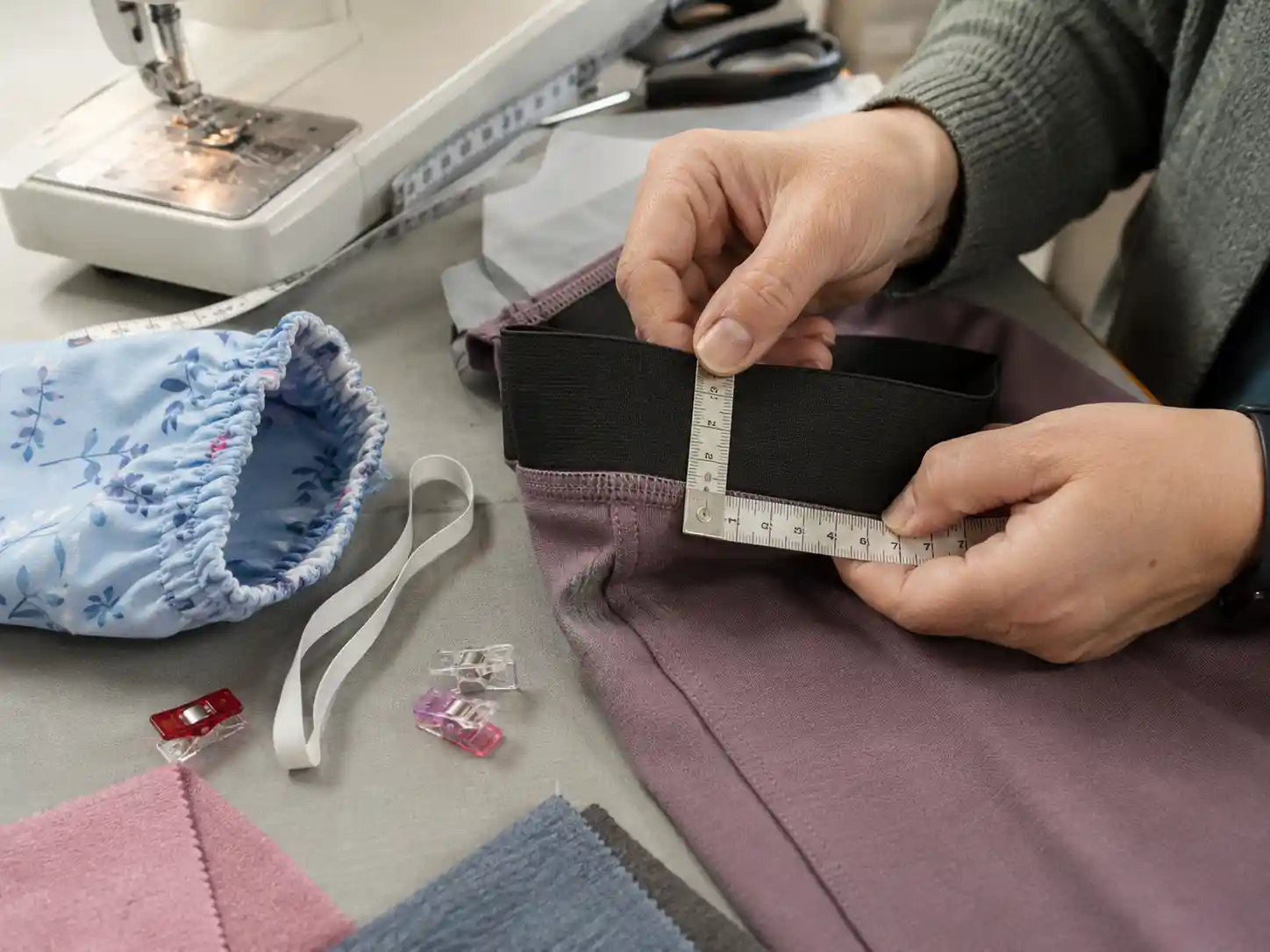
img.Hands measuring wide elastic on a garment waistband.webp
Eine Beschreibung für Großeinkäufe benötigt messbare Felder, anhand derer ein Lieferant ein Angebot erstellen, Muster anfordern und die Ware prüfen kann. Die fertige Anwendung sollte jeden Wert transparent darstellen.
|
Spezifikationsfeld |
Informationen, die bereitzustellen oder zu genehmigen sind |
|
Anwendung und Gewebe |
Kleidungsstücktyp, Kontaktfläche, Stoffgewicht, Nähmethode |
|
Konstruktion und Material |
Geflochten, gestrickt, gewebt, Jacquard, griffig oder mit Kantenbearbeitung |
|
Abmessungen |
Breite, Dicke, Toleranz, Rollenlänge |
|
Elastisches Verhalten |
Dehnungsziel, Rückstellverfahren, Zug- oder Zugkraftanforderung |
|
Aussehen |
Farbstandard, Muster, Logo, Oberflächen- und Kantenqualität |
|
Pflege und Tests |
Waschzyklus, Dimensionsänderung, Farbechtheit, erforderliches Prüfverfahren |
|
Bestelldetails |
Mengen-, Rollen- oder Zuschnittverpackung, Etiketten, Kartonanforderungen |
Musterprüfung und Produktionskontrollen
Kennzeichnen Sie jedes Muster mit seiner Konstruktion und seinen Abmessungen. Messen Sie die entspannte Länge, die gedehnte Länge, die Rückstellkraft und die Breite; wiederholen Sie die Kontrollen nach dem vereinbarten Waschgang. Überprüfen Sie Farbe, Kanten, Druckbild, Rollenkonsistenz und Verpackungsetiketten.
Der Käufer kann die Länge des Musters markieren, es in festgelegten Zyklen dehnen und das Ergebnis mit dem Ausgangsmaß vergleichen. Die Maße des gewaschenen Musters werden auf demselben Freigabebogen vermerkt. Diese Aufzeichnungen dienen Lieferant und Käufer als Referenz für den Produktionsauftrag.
Über Wubao Textile: Große Auswahl an elastischen Optionen
Wubao Textil Das Unternehmen stellt elastische Bänder und Gurtbänder her. Zum Sortiment gehören unter anderem Leinwandbindung, Köperbindung, Jacquardbindung, Häkelkanten, Latex-Grip, rutschfeste Silikonbänder und Gummibänder mit Maisstärke. Die angegebenen Breiten dieser Produkte liegen üblicherweise zwischen 2 und 5 cm; Köpergummibänder sind in Breiten von 1, 1,5 und 2 Zoll erhältlich.
Die Individualisierung umfasst Farbe, Breite, Muster, Logo, Elastizitäts- und Zugfestigkeitsanforderungen sowie die Verpackung. Lagermuster sind möglicherweise verfügbar, während für individuelle Muster und Geschäftsbedingungen ein Angebot erforderlich ist. Für einen detaillierten Musterplan und ein umfassendes Angebot für elastische Bänder benötigen wir Angaben zu Anwendung, Material, Konstruktion, Breite, Farbe, gewünschter Dehnung und Rücksprungkraft, Menge, Verpackung und Testanforderungen.
FAQ (häufig gestellte Fragen)
Frage 1: Welche Breite an Gummiband ist für einen Hosenbund am besten geeignet?
A: Pyjamas und leichte Röcke werden oft mit 1,25 bis 2,5 cm breitem Gummiband geliefert. Leggings, Hosen und Sportbekleidung verwenden üblicherweise 2,5 bis 5 cm breite Bänder. Die Breite des Gummibands sollte dem Muster, der Stoffstärke, dem Tunnelzug und dem gewünschten Halt angepasst werden.
Frage 2: Woran erkennt man, welche Größe das Gummiband haben sollte?
A: Folgen Sie zunächst dem Schnittmuster. Bei einem eigenen Design befestigen Sie den Gummizug an der gewünschten Stelle des Kleidungsstücks, geben die Nahtzugabe hinzu und testen Sie Tragekomfort und Formbeständigkeit mit dem tatsächlichen Stoff.
Frage 3: Wie verhindert man, dass sich breite Gummibänder einrollen?
A: Verwenden Sie stabiles gewebtes oder nicht rollendes Gummiband, sorgen Sie für ausreichend Freiraum im Tunnelzug, markieren Sie Viertelpunkte, verteilen Sie die Spannung gleichmäßig und heften Sie das Band an den Nähten fest, wenn die Konstruktion dies zulässt.
Frage 4: Welche Art von Gummiband kann direkt auf Stoff genäht werden?
A: Viele gestrickte und gewebte Gummibänder lassen sich direkt vernähen. Testen Sie das ausgewählte Produkt, da Nadelwahl, Stichart, Bandkonstruktion und Stoffgewicht das Ergebnis beeinflussen.
Frage 5: Wie viel Gummiband wird für einen Taillenumfang von 32 Zoll benötigt?
A: Verwenden Sie, falls vorhanden, die Maße des Schnittmusters. Eine praktische Anprobe ergibt eine fertige Schlaufe von 76 bis 79 cm; geben Sie bei dieser Verbindungsmethode etwa 2,5 cm für die Überlappung hinzu. Testen Sie das genaue Band, da die Dehnbarkeit die benötigte Länge beeinflusst.


