

The Ultimate Guide to Polyester Webbing: From Raw Fibers to Industrial Strength
Think about a sturdy backpack strap breaking on a tough hike up a hill, or a load-securing band giving way on a busy road. For those who make products, such issues go beyond simple hassles—they pose real risks that harm company image and put people in danger. What sets a reliable item apart from a poor one often comes down to the standard of the webbing material involved.
As an experienced producer, Wubao knows that webbing acts as the hidden backbone of your goods. This overview covers the details of polyester webbing, how it gets made, and ways to pick the best type for your particular needs.
Why Polyester? Key Performance Characteristics
People select polyester because of its distinct traits that fix usual problems in work settings.
- Low Stretch: Unlike some options, polyester keeps its size under big weights, so loads do not move around.
- UV and Moisture Resistance: It avoids decay or loss of power from the sun or dampness. This fits well for items like garden seats and boat gear.
l High Melting Point: It stays firm in hot spots.
Technical Comparison Table: Polyester vs. Nylon
|
Feature |
Polyester Webbing |
Nylon Webbing |
|
Stretch / Elasticity |
Very Low (High Stability) |
High (Excellent Shock Absorption) |
|
UV Resistance |
Excellent |
Fair (Can degrade over time) |
|
Moisture Absorption |
Very Low (Retains strength when wet) |
High (Can be heavy/stretch when wet) |
|
Abrasion Resistance |
Good |
Excellent |
|
Best Used For |
Tie-downs, Slings, Outdoor Straps |
Safety Harnesses, Climbing, Pet Leashes |
The Manufacturing Journey: From Polymer to Product
Building polyester webbing that meets heavy-duty demands involves several careful steps with exact methods. At Wubao, we draw on more than 10 years in the field to make sure each length hits high marks for quality.
Fiber Preparation and Extrusion
It all starts when polyester pieces get heated until they melt. Then, they pass through small holes to form long strands without breaks. Workers twist these strands into the tough yarn that goes into weaving.
The Weaving Process: Precision on the Loom
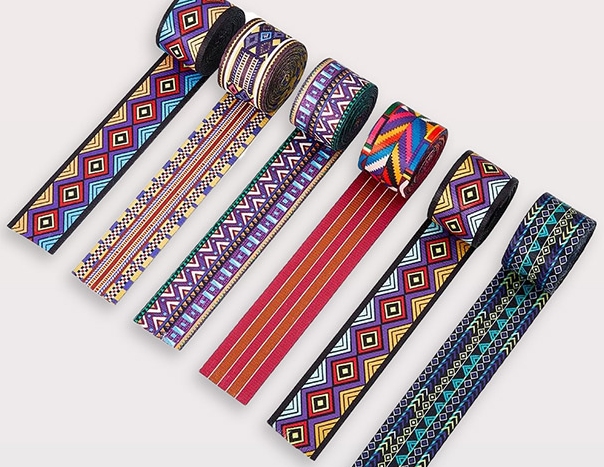
The yarn goes onto fast machines without shuttles for webbing. In this setup, the “warp” (up-and-down) and “weft” (side-to-side) threads cross each other. How they interlock sets the final traits of the webbing:
- Plain Weave: Gives a level, even top that’s good for adding prints and simple bands.
- Twill Weave: Creates a slanted ridge look, which boosts bend and fights wear from rubbing.
- Jacquard Weave: Lets you add detailed designs or marks right into the cloth for top-level branding.
Finishing and Quality Calibration
Once woven, the webbing moves to final treatments. These cover cleaning, steps to stop shrinking, and heat fixes for steady size. For special uses, it gets coatings against the sun’s rays or water. At Wubao, we apply three main checks for quality: tests on starting materials for safety, measures of size and springiness, and last pulls to test strength.
When Strength Meets Flexibility: Wubao’s Nylon Webbing
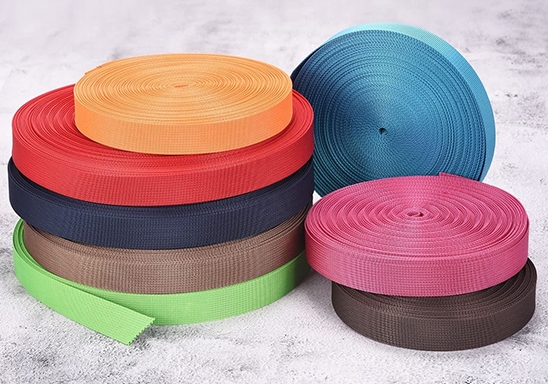
Polyester leads in steadiness, but some jobs call for the special features of Nylon Webbing. Wubao makes full high-tenacity Nylon webbing built for gear where safety matters most.
Key Advantages of Wubao’s Nylon Webbing:
- Energy Absorption: Its built-in spring lets it take in quick jolts, vital for items like climbing bands and rescue tools.
- Superior “Hand-Feel”: Nylon feels softer than polyester. This handles issues with rubbing in things like collars for pets, body straps, and fancy bag handles.
- Extreme Durability: It gives the best defense against surface damage, so it lasts long even with rough, everyday handling.
Application Scenarios: Solving Challenges
Outdoor & Tactical Gear: Reliability in Extremes
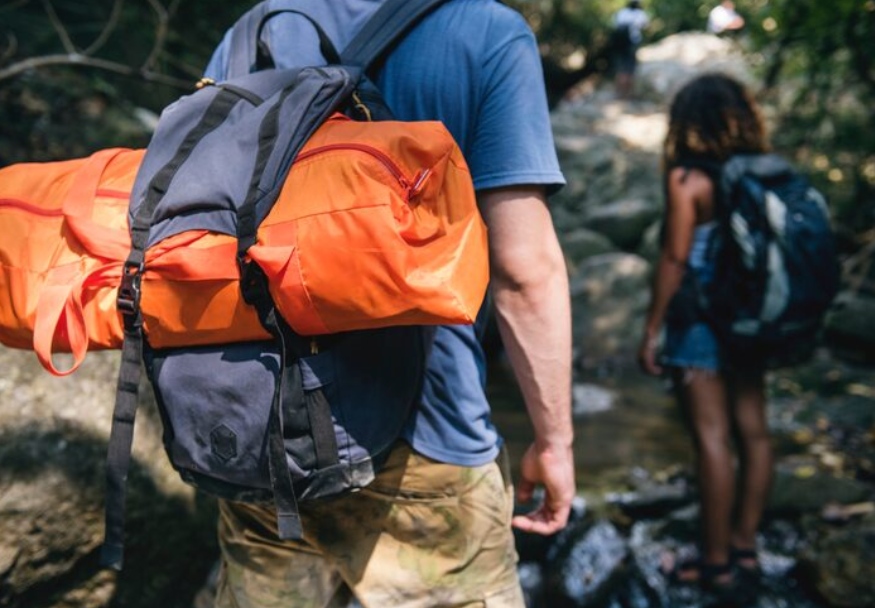
- The Problem: Regular bands may turn brittle under sunlight or get heavy from rain. Such changes can cause the gear to break down in remote areas.
- The Solution: With Wubao’s webbing that fights UV rays, made from polyester, backpack tighteners and tent holders keep their form. This brings solid dependability for those on the move.
Industrial & Cargo Management: Safety First
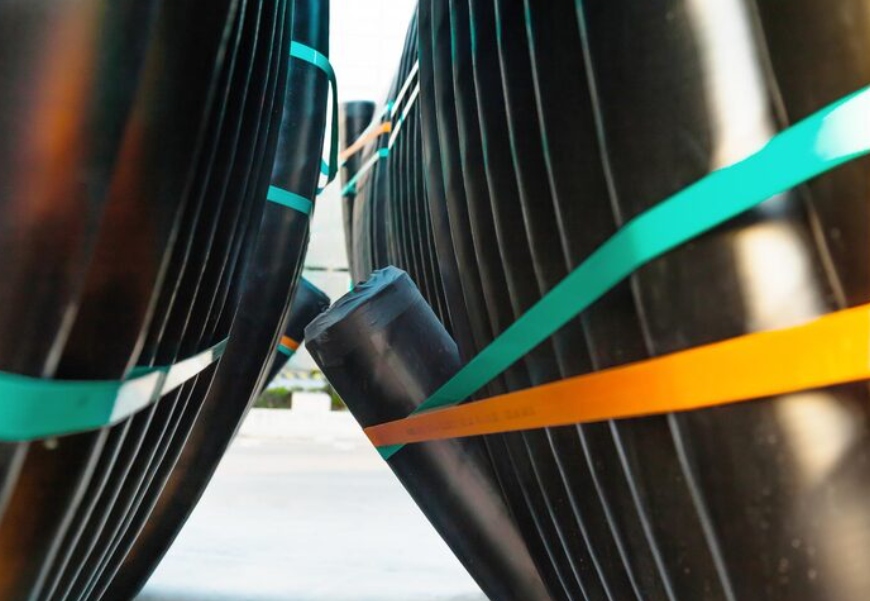
- The Problem: During shipping, a small stretch in a securing band can throw off the balance of goods. That shift might lead to crashes.
- The Solution: Our tough polyester webbing is designed for little lengthening. It holds the load firm, keeping everything in place from start to end.
Apparel & Accessories: The Balance of Comfort and Durability
- The Problem: Basic webbing in bags can press hard on shoulders and cause tiredness over time.
- The Solution: Wubao crafts support webbing that spreads weight smartly. For upscale styles, our jacquard polyester webbing mixes company marks with a gentle touch that avoids skin irritation.
Partnering with Wubao: Your Webbing Manufacturer
Wubao serves as more than a production site; we provide answers backed by over ten years in the trade. We handle both OEM and ODM options.
- Customization: We team up with you to create special shades (matching Pantone), distinct sizes, and exact pull strengths.
- Flexible MOQ: Our minimum orders adapt, beginning at 1,000 to 3,000 yards based on how complex the job is.
- Global Standards: Our goods follow world rules like REACH and RoHS. This makes them fit for markets around the globe.
Ready to Upgrade Your Product’s Foundation?
Avoid letting weak webbing drag down your line. Get in touch with Wubao now to talk about what you need or ask for samples at no cost.
Contact Information:
- WhatsApp: +8617712477116
- Email: oliviahe@wubaotextile.cn
FAQ
Q: Which is better for outdoor use, polyester or nylon webbing?
A: Polyester usually works better for long-term use outside. It shows stronger defense against UV light and skips taking in water, which stops stretching and decay in damp spots.
Q: Can polyester webbing be customized with a brand logo?
A: Yes. Through jacquard weaving methods, logos weave straight into the webbing build. This lasts longer than prints since the pattern stays without fading or coming off.
Q: What determines the “breaking strength” of a webbing strap?
A: Breaking strength comes from the denier (thickness) of the yarn, how tight the weave sits, and the grade of the base polymer in the extrusion step.
Q: Is there an eco-friendly option for webbing products?
A: Yes, the field moves toward green practices. Wubao provides a range of webbing and elastic bands from recycled fibers that aid brands in reaching eco goals.


